Category: Education

  • Should and shouldn’t

    Should and shouldn’t

    Should come first (after the subject and before another verb) in the verb phrase:

    Should comes first in the verb phrase (after the subject and before another verb):

    I should go home now.

    Should cannot be used with another modal verb:

    It should probably be sunny at that time of year.

    Not: It should may be sunny … or It may should be sunny …


    Negative form:

    The negative form of should is shouldn’t. We don’t use don’tdoesn’t, didn’t with should:

    There shouldn’t be many people at the beach today.

    We use the full form should not in formal contexts or when we want to emphasis something:

    We should not forget those who have given their lives in the defence of freedom.


    Question form:

    To make inquiries, the subject and should switch positions.

    We don’t use do, does, did:

    Should I turn on the air conditioning?

    Not: Do I should I turn on the air conditioning?

    Shouldn’t you be studying now?

    We use should and shouldn’t in question tags:

    I shouldn’t have told her that, should I?

    They should be getting back on Sunday, shouldn’t they?

  • We use : will

    We use : will


    We use the following words: will:

    • to express one’s thoughts on the present or the future
    • to discuss what people would like to do or are willing to do
    • to make assurances, offers, or requests


    The past tense version of will is would. It is used because it is a past tense:

    • to discuss the past
    • to discuss hypotheses (when we imagine something)
    • out of politeness


    Will is a verb that we used to communicate our opinions regarding the present or future:


    • John is expected to be in his office. (Present)
    • We’re going to be late. (Future)
    • We’ll have to take the train to get there. (Future)
    • To describe prior thoughts about the future, we use would as the past of will:
    • We use the following words: will:


    To discuss what people would like to do or are willing to do:

    • We’ll talk again tomorrow.
    • Maybe Dad will lend me his automobile.
    • to discuss typical behaviour, or things we do frequently (since we are willing to do them):
    • We always spend our vacations at our favourite beach hotel. Every morning, we’ll get up early, eat a quick breakfast, and then walk across the street to the beach.

  • Questions you might need to ask (and answers you might hear!)

    Questions you might need to ask (and answers you might hear!)

    Where is the nearest ATM?

    • There’s one outside the post office.

    Excuse me, do you know where The Hotel Belle Vue is?

    • Let me just check on my phone.
    • Carry on down this road until you see an ice cream shop, then turn onto the street on your right. It is somewhere towards the bottom of that road on the left.

    Hi there, can you show me on this map where the train station is?

    • Do you have a pen? I can circle it for you.
    • Here it is.

    Excuse me, do you live around here? I need some help with directions!

    • Sorry, I’m just visiting too.
    • Yes, sure, what are you looking for?

    Excuse me, do you have a second to help me with directions?

    • No, sorry, I’m running late.
    • Yes, where are you trying to get to?

    Do you know where I can buy a plug adaptor around here?

    • There’s a pharmacy on the high street, which is very close to here.
    • If you follow the signs to the train station, there is a mall on the way.

  • SHOPPING CONVERSATION

    SHOPPING CONVERSATION

    Questions you might need to ask (and answers you might hear!)

    How much is this?

    • It’s $5.99.
    • Those cost $1.99 each or three for $5.

    Do you have this in a bigger size?

    • Let me check for you.
    • No, I think that’s the largest size we have.

    Do you know where the potato chips are?

    • They’re on aisle five with the pasta. I can show you.
    • Just over there on the left.

    Can I have a receipt, please?

    • Sure, here you go.

    Can I pay by card?

    • No, we’re cash only, I’m afraid. There’s an ATM outside the shop, though.

    What time do you close?

    • We close at 8pm today.

    Are you open tomorrow?

    • Yes, from 9am until 5:30pm.
    • No, we are closed on Sunday.

    Where are the fitting rooms?

    • Just behind the cash register.
    • We don’t have fitting rooms, I’m afraid.

  • Verb forms in the conditional clause

    Verb forms in the conditional clause

    • Conditionals
    • Conditional sentences address hypothetical or uncertain circumstances and their possible outcomes. If: is the most prevalent sort of conditional clause.
    • If I get the job in Milan, ’ll be pretty happy.
    • We’ll have the party in the gardenas long as it doesn’t rain. (or … if it doesn’t rain. or … on condition that it doesn’t rain.)


    • Conditional sentences:


    • Conditional sentences consist of a conditional clause and a main clause:
    • [conditional clause]Ifa lot of people come[main clause]we’ll have to get extra chairs.
    • [conditional clause]Unlessyou book weeks in advance[main clause]you won’t get a flight.
    • The verb in the conditional clause reflects the speaker’s point of view on whether the imagined situation is likely or impossible:
    • If you win the next match, will you be in the semi-final? (present simple + will indicates the speaker thinks winning the match is possible or likely)
    • If I won a million pounds, I would give this job up tomorrow! (past simple + would indicates the speaker thinks winning a million pounds is not likely to happen)
    • If we had won the competition, we would have had a free trip to Moscow. (past perfect + would have refers to an impossible condition – the event did not happen)

  • Used phrases in English language

    Used phrases in English language

    When speaking English, some phrases are straightforward, and they appear frequently in regular conversation. You may develop highly comfortable discussions and respond to messages/emails by mastering such sentence and question patterns. You can quickly begin to dialogue in all areas by mastering the most fundamental English language patterns and question sentences. When replaced by various grammatical structures, these patterns, which are commonly utilised in everyday life, can also be used in your professional life. Consider the following example:

    Can you give me your laptop bag? (Daily use)

    Could you please give me your laptop bag? (Official use)

    Let’s take a closer look at some everyday English sentences:

    Which languages do you speak? How many languages do you speak?

    Do you speak any foreign languages? How much does your city have?

    What’s your president’s name? Where are you going on vacation?

    How many degrees is it today?

    What is the capital of England?

    How many brothers do you have?

    What is your profession?

    What do you do? Where do you work? What’s your date of birth?

    Where are you from?

    When do you want to leave?

    Welcome here. How can I help you?

    What would you like to drink?

    What would you like to buy?

    You can sit here. Have a seat here, please?

    Sorry, it’s busy here. This table is booked, Sir.

    Which table would you like to sit at?

    We have room in the garden, Sir. Would you like to sit outside?

    We have a room upstairs.

    Food list, please!

    Today, what’s on the menu?

  • The simple past

    The simple past

    The simple past tense indicates that you are discussing an event that has already occurred. Unlike the past continuous tense, which is intended to describe events that occurred across time, the simple past tense stresses the completion of the action.

    Wolfgang admired the way his silver medal glinted in the light.

    You can also talk about a former state of being, like as how someone felt about something, using the simple past. The simple past tense of the verb to be, along with an adjective, noun, or prepositional phrase, is frequently used to convey this.

    The competition had been the highlight of his week for him, How to Write a Simple Past Tense.

    Add -ed to the root form of the verb (or just -d if the root form already ends in an e) for normal verbs:


    Play→Played Type→Typed Listen→Listened Push→Pushed Love→Loved


    When it comes to irregular verbs, things get a little more complicated. A simple past tense for some irregular verbs appears just like the root form:

    Put→Put Cut→Cut Set→Set Cost→Cost Hit→Hit


    The simple past forms of other irregular verbs, such as the verb to be, are more erratic:


    See→Saw Build→Built Go→Went Do→Did Rise→Rose Am/Is/Are→Was/Were


    The good news is that, with the exception of the verb to be, verbs in the simple past tense do not need to agree in number with their subjects.

    Wolfgang buffed up his medal. The medals of the other winners were also polished.

  • The simple present is a verb tense that can be used in two ways.

    The simple present is a verb tense that can be used in two ways.

    The simple present is a verb tense that can be used in two ways.

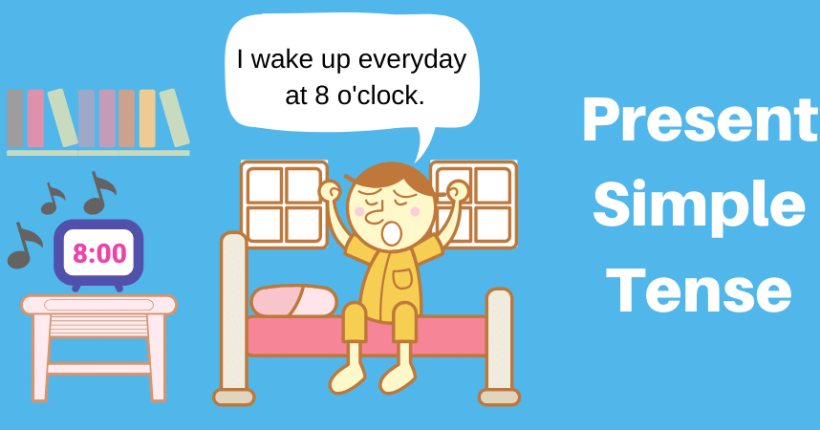
    When something is happening right now or on a regular basis (which is why it’s sometimes termed present indefinite), we employ the simple present tense. The simple present tense can be constructed using the root form or by adding s or es to the end, depending on the person.

    Ex: I’m in terrific shape! Pauline is a huge fan of pies. I’m sorry to hear you’ve become ill.

    The alternative option is to discuss routine activities or occurrences.

    Every day, Pauline works on her piano skills. During the summer, Ms. Jackson travels. Hamsters keep running throughout the night.

    We usually use the present continuous to indicate a temporary action that is now taking place: Pauline can’t answer the phone right now because she is cleaning her teeth.

    How do you make a simple present?

    Except in the third-person singular, most regular verbs employ the root form in the simple present (which ends in -s).

    First-person singular: I write


    Second-person singular: You write


    Third-person singular: He/she/it writes (note the ‑s)


    First-person plural: We write


    Second-person plural: You write


    Third-person plural: They write


    For a few verbs, the third-person singular ends with -es instead of -s. Typically, these are verbs whose root form ends in o, ch, sh, th, ss, gh, or z.


    First-person singular: I go


    Second-person singular: You go


    Third-person singular: He/she/it goes (note the ‑es)


    First-person plural: We go


    Second-person plural: You go


    Third-person plural: They go

    You put the negation of the verb before the verb in most normal verbs, such as “She won’t go” or “I don’t smell anything.”

  • THE INFINITIVE OF A VERB

    The infinitive of a verb is the basic form, for example ‘do’, ‘be’, ‘take’, and ‘eat‘.

    This form is called the zero infinitive.

    The infinitive is often used with ‘to’ in front of it. To +infinitive is called ‘to-infinitive’.

    When you read about verbs , or a teacher explains to you about verbs , they will often say the verb with preposition ‘to’. This is done  because there are many verbs that have the same forms as nouns. For example, sleep. Sleep can be a noun , and it can also be a verb (to sleep).

    The infinitive doesn’t show you the tense of the sentence, or who is doing the action (subject).

    So, when you put your basic form of the verb (infinitive) into a sentence , it will change.

    Let’s look at an example ; we will take verb ‘to eat’ and put it in different tenses.

    Present Simple – I usually eat lunch around 1 pm.

    for 3rd person singular the form changes – He usually eats cereal for breakfast.

    Present Continuous –  I am eating a banana.

    Past Simple – We ate fish for dinner last night.

    Past Continuous – We were eating when the phone rang.

    Present Perfect – I have eaten seafood many times.

    Future Simple  – I will eat chicken and French fries for dinner.

    The basic form of the verb changes (conjugates)
    صَرَّفَ فِعْلاً

    when you use it in a certain tense.

    * Infinitive can never be the main verb of the sentence. You can see infinitives in some sentences, but they always come after the main verb.

    Example –

    I want to play.

    I need to go to work.

    I have to finish my report.